An editor like the ones we used
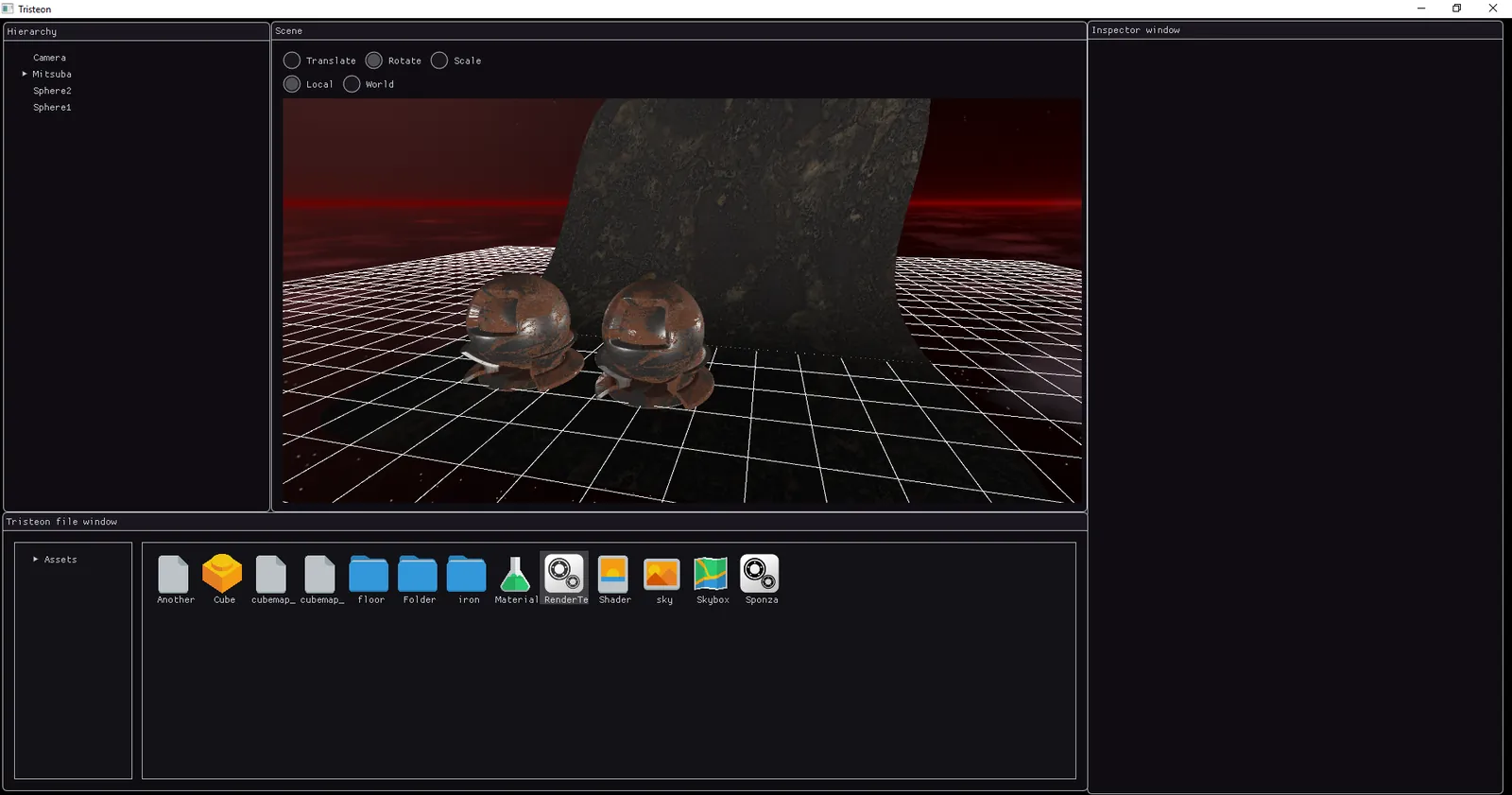
Tristeon 3D was built in five months by two students. I wrote its complete editor in ImGui: a scene view with transform gizmos, a hierarchy, an inspector that edits any component, and an asset browser.
The asset browser scans the project folder and generates a metadata file for every asset, holding its import settings, so assets can be renamed and moved without breaking references. The editor lives in its own layer, separate from the engine and game code, so a game ships without it.
Reflection and serialization
C++ has no reflection, so we built our own. Every serializable type registers a factory in a static map before
main runs. Scenes and prefabs are stored as JSON with the type name of each object, and the
deserializer rebuilds any component from that name, including types the engine has never heard of, written
by the game.
The same introspection drives the inspector: it can show and edit any component without hand-written UI.
template <typename T>
struct DerivedRegister : TypeRegister
{
    DerivedRegister()
    {
        getMap()->emplace(TRISTEON_TYPENAME(T),
                          &CreateInstance<T>);
    }
};

static std::unique_ptr<IntrospectionInterface>
createInstance(const std::string& s)
{
    const auto it = getMap()->find(s);
    if (it == getMap()->end()) return nullptr;
    return it->second();
}

// In a component's header:
REGISTER_TYPE_H(MeshRenderer)
Where it came from
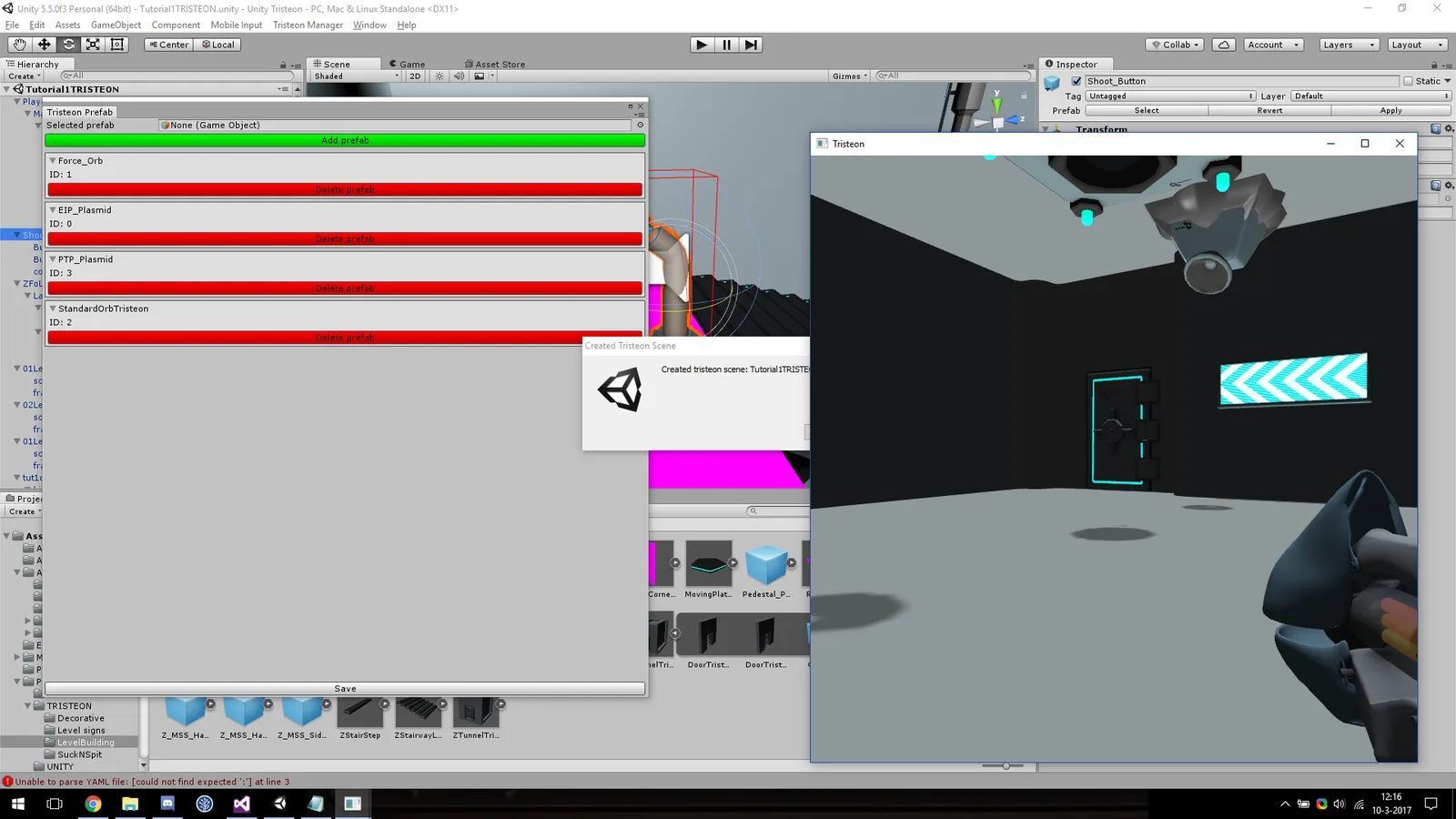
Tristeon grew out of our first engine, built earlier that year for the puzzle game Orb. There I wrote the physics and made Unity the level editor; Tristeon was the step to a real editor of our own.
Choosing a scripting language for the engine led to a separate study: C# vs. Wren.
Built with Leon Brands, who focused on rendering.