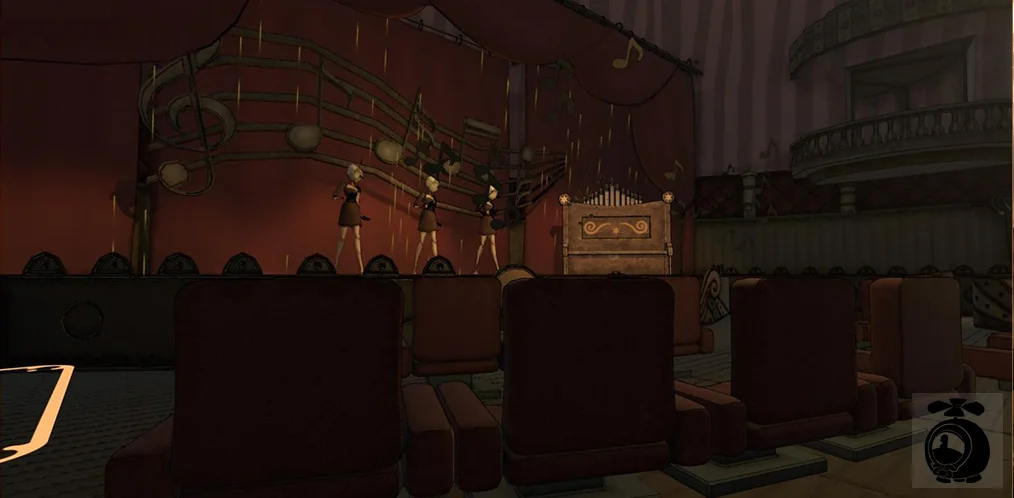
Getting around a theatre in VR
The theatre is far bigger than a living room, so players move by teleporting. Pointing a Vive controller draws an arc: a projectile curve traced segment by segment until it hits the world. Only flat, walkable surfaces count as a landing spot, so nobody ends up inside a prop or stuck to a wall, and the target marker shows exactly where you will stand.
Instant teleporting keeps players comfortable, and the arc makes distant balconies and the stage reachable without any instructions.
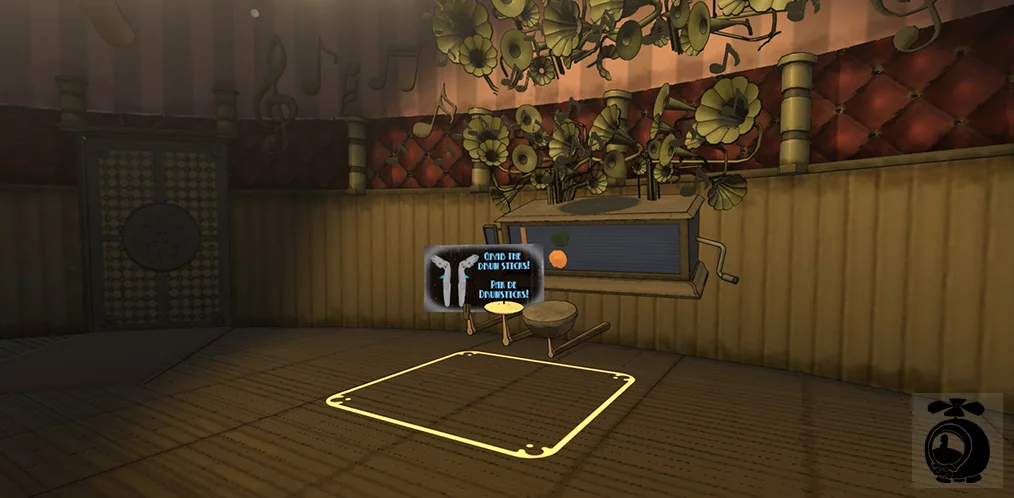
Designers wire up the game themselves
With six people and ten weeks, programmers could not be the bottleneck for every door, switch and puzzle. I built a trigger system the designers used directly: give any object a trigger, pick what should happen from a dropdown of functions, and type in the parameters. On enter or on collision, it runs.
That let the designers set up interactions themselves while I worked on the systems underneath.
A level editor for the rhythm game
One of the mini-games is a rhythm game played to the band's music. Placing notes by hand in seconds would never line up, so I built an editor inside Unity that works in beats instead: set the song's BPM, and notes snap to a beat grid that stays in time with the track.
A year later I built a full rhythm-game editor of my own, the osu!catch level editor.

Made by a team of six students at Saxion University of Applied Sciences.